


Recent tariff increases in the USA on goods from the European Union have caused significant disruption in global markets. The new tariffs affect all transactions made by companies exporting to the US market. The extent of the impact largely depends on the content of the commercial contracts in place.
This situation highlights the crucial role of precisely dividing responsibility for delivery conditions and the principles of bearing its costs in commercial contracts.
How then should exporters act in the current situation to prepare for tariff increases? Here are six issues to consider:
Analysis of contracts and incoterms clauses
Firstly, sellers should thoroughly analyze the terms of commercial contracts regarding delivery costs and the Incoterms clauses used in them.
Incoterms (International Commercial Terms) are often used in international transactions to define the responsibilities of buyers and sellers. For example:
- FOB (Free on Board) or EXW (Ex Works): The buyer is responsible for importing the goods and paying the tariffs. Under these rules, US importers bear the cost of increased tariffs.
- CIF (Cost, Insurance, and Freight): The seller covers the costs until the goods arrive at the port, but the buyer is responsible for customs duties and tariffs.
- DDP (Delivered Duty Paid): In this case, the exporter is responsible for paying all tariffs, including any applicable duties. Sellers using this rule may be forced to bear the full cost of tariffs imposed in the USA.
The DDP clause in exporters' contracts will therefore place them in the least favorable position in connection with the introduction of tariffs.
Active communication and preparation for renegotiating commercial contracts
Renegotiation of Incoterms clauses or entire contracts may be necessary to account for the risks associated with new tariffs and eliminate ambiguities regarding responsibility for them.
Sellers should engage in proactive communication with clients to establish and confirm the principles of bearing customs costs before the goods reach the destination country and a dispute arises.
Analysis of the possibility of terminating or unilaterally changing the commercial contract – special clauses
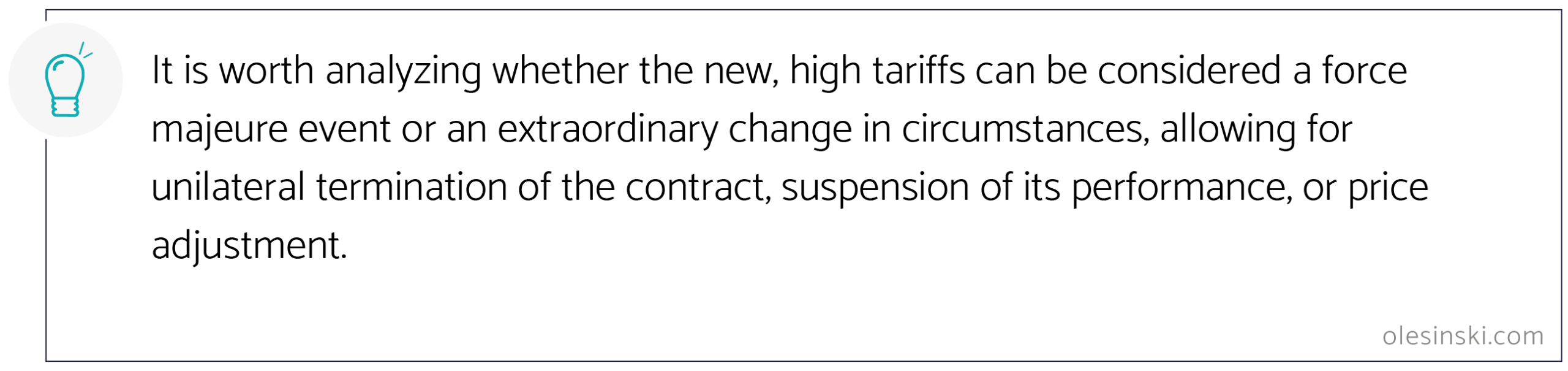
In extreme cases, the buyer or seller (depending on who bears the increased tariff cost) may seek to definitively terminate contracts if the tariff increase calls into question the sense of continuing cooperation. They may also attempt to unilaterally impose changes to the commercial terms.
Therefore, the contracts should be thoroughly analyzed in advance, including special clauses that allow for price adjustments or contract termination in such situations.
Firstly, it will be crucial to determine which law governs the contract and which courts have jurisdiction over it (e.g., Polish law vs. US state law).
Negotiations of future commercial contracts
Under current conditions, entering into new contracts will require an even more careful approach to negotiations and consideration of the potential effects of tariff changes on product prices and delivery costs. The more precise the contract is in this regard, the less room there will be for future costly disputes over its interpretation. This will also reduce the risk of disruptions in supply chains and relationships with clients.
Short-term contracts
Due to the possibility of frequent changes in tariff policy (as we currently observe with US tariffs, suspended for 90 days just a few days after their initial introduction), it may ultimately be more beneficial for exporters to negotiate shorter contracts. This provides greater flexibility in successively adjusting cooperation conditions to changing tariff burdens, as well as other potential regulatory changes.
Dispute phase – breaches of contracts, compensation, and enforcement of judgments
In the worst-case scenario, the seller may decide to withhold delivery until the buyer covers the cost of new tariffs. Conversely, the buyer may refuse to pay additional customs fees if the contract does not pass them on to the seller.
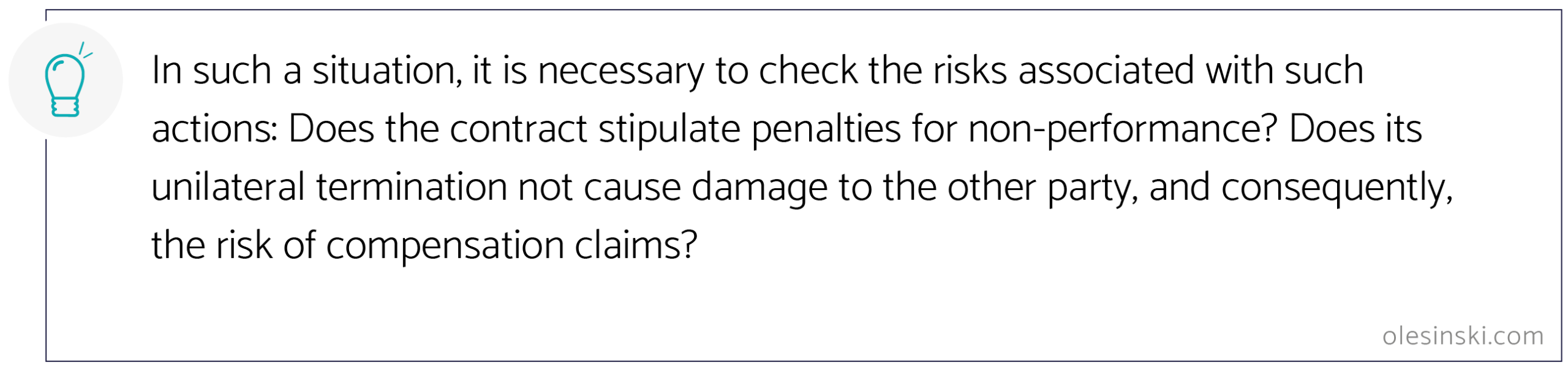
It should also be noted that authorities will most often resolve disputes in favor of the party that negotiated a lump-sum price for the delivered product ("all-inclusive").
What conclusions can exporters draw from the current tariff situation?
The change in US tariff policy will have far-reaching consequences for trade with exporters.
Relying on general contractual reservations rarely proves effective. The consequences can be significant – loss of deposits, detention of goods at the port, and even judgments or arbitration decisions requiring substantial compensation payments.
When verifying and drafting commercial contracts, it is now more important than ever to use clear provisions regulating the approach to tariffs and their possible changes. We are happy to help analyze existing commercial contracts and draft new ones – feel free to contact us.